Hidden Sin

It seems that the closer I walk and abide with Jesus, the more I recognize my weaknesses and deficiencies. 

For the last two weeks, I have been investigating the cause of groundwater pollution originating at a grain elevator facility and determining the extent of damage.  I was struck by the parallels between the deterioration of our natural resources as a result of a hidden leak from a tank, and the impact that hidden sin in our hearts can have on our sense of being and on others around us.   

“Pollution takes place when we do things our way, refuse God’s lordship, and see ourselves as the ones in control,” says Philip Carlson in Love Written in Stone.  I agree, but as an environmental scientist, I have witnessed that many causes of pollution occur due to neglect or inattentiveness rather than out-right rebellion.  In this case, the tank and associated piping had unknowingly leaked slowly over a long period of time.  Now, over 25 years after its removal, the effects have become evident and far-reaching.

Some pollution in the heart is immediately evident – explosive anger or the need to control things. But there are the slow leaks that are not so obvious – the critical thoughts or the negative self- talk. Perhaps the pollution occurs as a result of neglect (not consciously abiding in Him), inattentiveness (too busy to notice), or not taking preventative measures (taking every thought captive for Christ).  

The impact may not be immediately noticeable but could have long-term far-reaching effects.    I may not realize that these things impact anyone besides me, but over years of practice, they will affect my relationships and how I project myself. 

When the Holy Spirit reveals the hidden sin in my heart with its invisible leaks, I am learning to lean on His grace instead of wallowing in guilt, allowing the leaks to become an opportunity for transformation.  Every discovery reminds me that I am always in need of the cross and enables me to cherish the cross even more.

90 Days to God's Goodness - Book Review

Why would God create a world where people suffer so much? But how remarkable that no one will ever suffer as much as He did!  “Evil and suffering formed the crucible in which God demonstrated his love to humankind,” explains Randy Alcorn in his book 90 Days of God’s Goodness.  God understands our pain and suffering, and none of it takes Him by surprise or by accident.
This devotional-style book tackles the issue of how God can be considered good when he allows pain and suffering to exist in our lives.  Each of the 90 days begins with a passage from the Bible – not just a verse or two, but enough of the passage to get a clue of the context.  The author follows up with application of the passage through illustrations drawn from people who have experienced God’s goodness in deep suffering. The end of each day includes a brief prayer that ties together the theme by expressing gratitude and dependence on God.
While this book is not a systematic theology on the providence of God or a treatise on the meaning of evil and suffering, it offers comfort and encouragement for those wandering through the dark valley of pain.  At the beginning of the book, I felt like it was most applicable for those who have suffered loss through the death of a child.  However, the further I got into this book, the more I found it can apply to all types of painful situations – chronic pain, depression, job loss, unfair lawsuits, diagnosis of a terminal illness.    I highly recommend this book to anyone going through the dark valley of the shadow of death who is searching to find meaning in suffering and draw closer to God.  Through the truths in this book, God will minister to your heart and bring healing and hope.
Take a look at the first chapter to see if this is the book for you!
I received this book for free from WaterBrook Multnomah Publishing Group for this review.

Thoughts on Evil and Suffering

A tragic car accident stealing the life of a child, loss of a husband to cancer, discovery of a baby’s disability, difficult marriages, miscarriage, church homes that lose their unity and split, children who wander away from the faith, being diagnosed with a chronic or terminal illness, depression, rape, violent crime, job loss, unfair lawsuits…..I have girlfriends who have experienced these things.  I can claim a couple of the painful situations for myself.  Here are some thoughts on the meaning of evil and suffering that I noted from reading 90 Days of God’s Goodness, by Randy Alcorn:
·         A world of freedom must have cause and effect, and freedom must include consequential choices.

·         Suffering WILL come.  Trusting God does not mean evil and suffering will be held at bay. However, they do have a purpose and they do not happen by accident.

·         God has authority over Satan, who inflicts evil in the world.  Satan is not his opposite. If God were a heavy-weight champion, Satan would be like a whiney 3-year-old in comparison.

·         Good Friday is not Bad Friday because what was temporarily bad became what is eternally good.

·         The heart of the problem of evil and suffering was addressed in Christ’s redemptive work on the cross.

·         No affliction ever finds you without first being filtered through God’s hands.

·         God uses evil and suffering to accomplish immeasurable good.  Even when we can’t see any redemptive meaning in it on this side of heaven, we can trust that God CAN see it.

·         We must trust that we are just too small to see God’s big picture.

·         What Satan intends for evil to destroy our faith, God intends for good to invite us to draw nearer to Him.

·         God does not wait until we die to snap His fingers and transform us into what He wants us to be.  He begins transforming us now and uses suffering to help us grow into Christlikeness, preparing us for the next world.

·         “For Christians, this present life is the closest they will come to Hell. For unbelievers, it is the closest they will come to Heaven.” –Randy Alcorn

·         By God’s grace, we can have a happy ending no matter what, and that ending is not the end.

In Christ Alone - Book Review

Jesus did not come to make our lives more pleasant or to add something to life.  He came on a deliverance mission to save us and destroy the works of Satan.  In the book In Christ Alone, by Sinclair Ferguson, a theologian and pastor, I found a treasure that deepened my understanding of Jesus Christ as Savior, the meaning of the cross, and how this affects living out my faith in daily life.
While the book is divided into six parts, the 50 chapters essentially could be divided into two sections:  doctrinal and practical.  The doctrinal section is biblically sound, interesting and enlightening (not as dry as the word “doctrine” may sound).  The identity, revelation, fulfillment, and works of Jesus are explained in a way that will cause you to fall deeper in love with Him.  One of my favorite parts was the examination of how Christ is the key to understanding the Old Testament using the book of Hebrews.  The identity of the Holy Spirit is also well-described in His deliverance, power, and empowering.  He asks, “Does the indwelling of the Spirit seem a poor substitute for Jesus Himself?” (p. 119), and he answers this in such a way that your heart will soar at how blessed you are to be on this side of the cross.    
The second half of the book is richly practical.  The author addresses the privileges that are ours in Christ and the importance of studying His Word.  The life of faith is not in looking for the extraordinary and miraculous, but in being so nourished by the Word of God that you are energized in living in light of what it says.  Faith is more than understanding, but expressing the melody of the gospel in your lifestyle.  He explains how to deal with sin in your life, how to live in a holy and right manner, how enjoying our assurance of our salvation can lead to living to God’s glory and pleasure, how to tackle temptation and put sin to death in your life, how to live faithfully for Christ in a faithless world, and much more. 
I found a gold mine in this book and it is now my new all-time favorite book next to the Bible! This is the kind of book you can read over and over.  It is not for speed reading, but rather for mulling over one chapter at a time, savoring each bite before swallowing and taking the next one.  I only have a PDF copy to review and cannot wait to get the complete bound book in my hands so that I can read it again and highlight or underline all the things I want to remember for the rest of my life.  I give this book 10 stars out of 5!!
I received this book free from Reformation Trust in exchange for a review. The opinions I have expressed are my own. I am disclosing this in accordance with the Federal Trade Commission.

I Am His - Book Review


Having just finished a profound book probing the identity and works of Jesus and the presence and indwelling of the Holy Spirit, it was refreshing to pick up this simple book that focuses on the third person of the Trinity – the Father.  In I am His: Experiencing the Comfort of Abba’s Love, Rita J. Platt guides us through an eight-week devotional journal on our relationship to God as our comforting yet powerful Abba Father.  Each week is divided into five parts: an introductory illustration, pondering related Scripture verses, reflection, and response.
The author explains that even though our view of our earthly fathers impacts how we may think of our Heavenly Father, we can expand beyond the tangible examples in our lives to understand what a perfect Father is like, only found in God – our Abba.  He is more than all the strengths of our earthly fathers and has none of the weaknesses. 
This book is easy to read, personable, and is easily studied in possibly four weeks instead of eight, even if you reflect on and respond to every exercise she recommends for application, worship and prayer.  It helped me to think of God as my personal Abba, Father, in a concrete way when I meet with Him.  However, for me, this book lacked theological depth and pulls Scripture verses from all over the Bible to match the topic, not a practice that I favor.
I recommend this book especially for those who have a hard time thinking of God as Father, particularly because their earthly fathers were absent, disappointing, or abusive in some manner.  For those, like me, who think fondly of their earthly fathers who sought to follow hard after God, this book is still a good tool to opening ourselves to the fathering of God as Abba/Daddy. 
I received a complimentary copy of this book from NavPress Publishers in exchange for a book review. I was not required to write a positive review. The opinions I have expressed are my own. I am disclosing this in accordance with the Federal Trade Commission's 16 CFR, Part 255: "Guides Concerning the Use of Endorsements and Testimonials in Advertising."

Spiritual Amnesia

I experienced a case of spiritual amnesia during the busy work days this week.  Yesterday, at the end of the long hard day, I heard a song on the radio as I was driving home that proclaimed the glorious name of Jesus.  My heart sang with joy at hearing His name! Then it dawned on me, as all my memory came back, that I had gone through the entire work day most days this week without even thinking of His name consciously, let alone experiencing His continued presence with brief prayers of thanksgiving or intercession.  I had started my mornings in His Word, so what happened to me? Even more, how often has this happened to me and I never even noticed?
Busyness? Normally, I sit behind a desk and computer, writing or critiquing technical reports.  My thoughts easily turn to Him as I am surrounded by reminders like my memory verse flashcard or devotional emails in my inbox.  The quietness and peacefulness is also conducive to allowing my mind to wander toward Him. 
This week, I worked outside, overseeing a crew with a drill rig and mobile lab to delineate a contaminated groundwater plume.  My mind was continually spinning with new data and decisions throughout the days as we fought to work against violently gusty winds and rain.  One day, when the sun popped out for a few minutes and a bird flew overhead, my thoughts slowed down enough to notice and turn toward God, but only momentarily.
Subconsciously I know He was with me all day, but I had missed out on the sense of abiding in Him, the blessing of asking and allowing Him to guide my steps and decision.  Still, the sweetness of hearing His name reminded me He was continuing to pursue me and was always with me, whether I acknowledged it or not.  While I am ashamed that I experience spiritual amnesia from time to time, I know He forgives me and accepts me as I am through the righteousness of Jesus.  This week’s case of spiritual amnesia reminds me to ask Him to daily open my eyes to Him, to seek Him all day long, and to treasure the abiding relationship that He wants to have with me.   

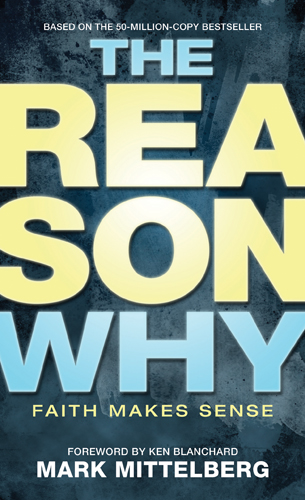
The Reason Why - Book Review

What if all your days here on earth were merely preparation for the life that comes next, the REAL one? This is one of the first questions that Mark Mittelberg asks in The Reason Why Faith Makes Sense, his updated and expanded version of the original classic by Robert A. Laidlaw. In six short chapters, he addresses perplexing questions from “Is there a God” to “What am I supposed to do about it?” He uses everyday life illustrations that anyone can relate to in order to help them grasp the answers to some baffling questions.

Within each of the six major questions, other questions that you might not venture to ask out loud are also considered. Some of them are thought-provoking questions that my children have asked me recently, like “Why did Jesus have to die? Couldn’t God just forgive and forget without punishment, like He asks us to do?” Just the other day, my 9th grader asked, “Why didn’t God just make us so that we would all love Him and never sin?” Mark Mittelberg answers these questions simply without being simplistic.

The book is easy to read and tackles the answers with clarity and ease. I highly recommend it for anyone undecided about the existence of God or dealing with nagging doubts about their faith. I also recommend this book for those who are firm in their faith but want to be able to answer these questions for themselves or others in a clear and concise manner. I am going to add this book to my teenagers’ reading list this summer and recommend it to my agnostic friend.

I received a complimentary copy of this book from Tyndale House Publishers in exchange for a review. The opinions I have expressed are my own. I am disclosing this in accordance with the Federal Trade Commission.

Fast Food or Gourmet Bible?

As a young teenage girl, I was obsessed with horoscopes to guide my day, eagerly searching them out each morning in the newspaper.  A good friend pointed out that this daily practice was an offense to God (though she never really explained why).  In an effort to find an acceptable alternative, I copied my favorite verses from Proverbs onto tiny pieces of paper, rolled them up, tied them each with a colorful piece of yarn and placed them in a small glass jar.  When the jar was full, each morning I would pull one out at random to read and live by for the day instead of reading my horoscope. 
I wonder what God thought of my fortune cookie approach to His Word? Are one-verse devotional readings, promise books, and verse-a-day calendars the same thing – like spiritual fortune cookies? Ways we seek to get a faith fix?  What does God think when I use a fast food approach to His Word? 
I know a fast food diet is unhealthy, but it is readily available and quickly eaten.  A steady diet of fast food would wreak havoc on my heart and arteries. Maybe God wants me to approach the Bible more like a gourmet meal – savoring the flavor, chewing it slowly and enjoying it.
Perhaps a verse with a pithy devotional has its place – a few minutes in a busy day to focus my thoughts on God and to open my heart to hear Him speak.  But He also wants me to take the time to study His Word – the complete passages in context, that I may be able to think God’s thoughts after Him instead of imposing my own ideas on the meaning of a single sentence.
I yearn to be so nourished by His Word that it fills my mind, directs my feet, and gradually transforms me.   A burger and fries are alright sometimes, but I would rather have almond butter chicken and Caesar salad.

Book Review: A Deeper Kind of Calm, by Linda Dillow

Sometimes when I am in the valley of hardship, it is hard to pick up a book because my attention span is short and my mind is weary.   In those times, when extra doses of strength and encouragement are needed, Linda Dallow’s book A Deeper Kind of Calm is a perfect read.  She describes the "Valley of Weeping" as a place of experiencing illness, physical pain, prodigal children, relationship difficulties, or enemy attack (enemies may be a person, or it may be fear, anxiety, despair, or depression). 
The author draws from four Psalms to describe four biblical aspects of faith as a survival guide through the valley:
1.    Remembering – She provides practical ways to remember what God has done.  Intentionally meditating on how He has shown you His ways in the past transforms  a ‘pity party into a praise celebration’.

2.    Hiding – She uses real-world application on how to hide in God as our refuge and find the inner strength we need to face trials.

3.    Clinging – She gives concrete illustrations on what it means to cling to God, using four attitudes that caused David’s heart to cling based on his desperation and dependence on God.

4.    Journeying – She depicts the walk through the fog in the valley as a necessary journey in faith where we hold God’s hand.  Through the valley, we journey to the sacred place, experience the blessing of intimacy with God, and grow in character.
A key theme I draw from the book is that “the woman of strength dares to dig blessings out of hardships”, and she displays how this really works in the nitty-gritty of life.
The short sections and poignant illustrations will enable you to focus and draw strength in order to not only keep moving forward, but also to find the sweet blessings buried in the valley.  A four-week Bible study at the back of the book pulls you deeper into the Psalms with each of these aspects and assists in applying it to your life.  It is an easy read in a hospital waiting room or late at night when sleep won’t come.  I consider it a must-read-again when I travel through the dark places or want to help a friend through them. 
I received this book free from NavPress Publishers as part of their Blogger Review Program. I was not required to write a positive review. The opinions I have expressed are my own. I am disclosing this in accordance with the Federal Trade Commission's 16 CFR, Part 255: "Guides Concerning the Use of Endorsements and Testimonials in Advertising."

Was Jesus Emotional?

My husband sometimes describes me as a moody person.  At times, the tears come quickly or the laughter erupts more readily than others. Sometimes I feel gushy and express my love and appreciation at the smallest things, while other times my tongue is sharp and my patience slim.  Pulling the reigns on my emotions requires self-discipline to prevent them from negatively controlling my words and actions.

Since I want to follow the pattern of Jesus, I have to ask, how much were emotions a part of His life?  I have never imagined Jesus as an emotional person, yet I know He had emotions.  He experienced laughter, tears, compassion, and anger, but He did not sin.  

Sinclair Ferguson discusses the true, deep humanity of Jesus in his book In Christ Alone, saying “Jesus’s sinlessness should not be equated with emotionlessness.” In fact, it is quite the other extreme.  He cites the example of illness and death of Lazarus when Jesus wept (John 11:35), deeply affected by Satan’s reign in sin and death. 

Jesus could see human need with perfect clarity and feel it with ‘unparalleled intensity’ compared to our foggy awareness. “His holy humanity experienced heights and depths of emotion unknown by sinful humanity” (p. 70).  When He resurrected Lazarus from the dead with a single command, the ultimate miracle, I wonder what He felt then? 

Can you imagine experiencing all the emotions of womanhood without sinning?  To experience all the highs and lows without your thoughts going down paths they shouldn’t go?  To allow them to drive you to closer in intimacy with God? 

Whether I experience the high peaks of joy or the low depths of despair, I want my emotions to be ignited by the Holy Spirit within me.  I do not want my emotions to rule me, but sometimes they propel me into action that might otherwise lie dormant.  I resolve to cherish all the emotions that come with the gift of womanhood so that God may use them to transform my character.